
Ants are among the most common pest complaints from homeowners across Massachusetts and New Hampshire. A handful trailing across your kitchen counter can seem minor at first. But this activity often means a colony has already settled inside your walls, under your floorboards, or in your home’s structural frame.
Left unaddressed, ants can contaminate your food, cause costly damage, and spread quickly to other areas of your property. Knowing how to keep ants out of your home starts with understanding what draws them in. Most often, ants are looking for food, water, and a warm place to nest, and New England homes offer all three.
If you are already seeing ants, call Pest Control Unlimited at (888) 649-9919 or contact us online for a free inspection and same-day emergency service.
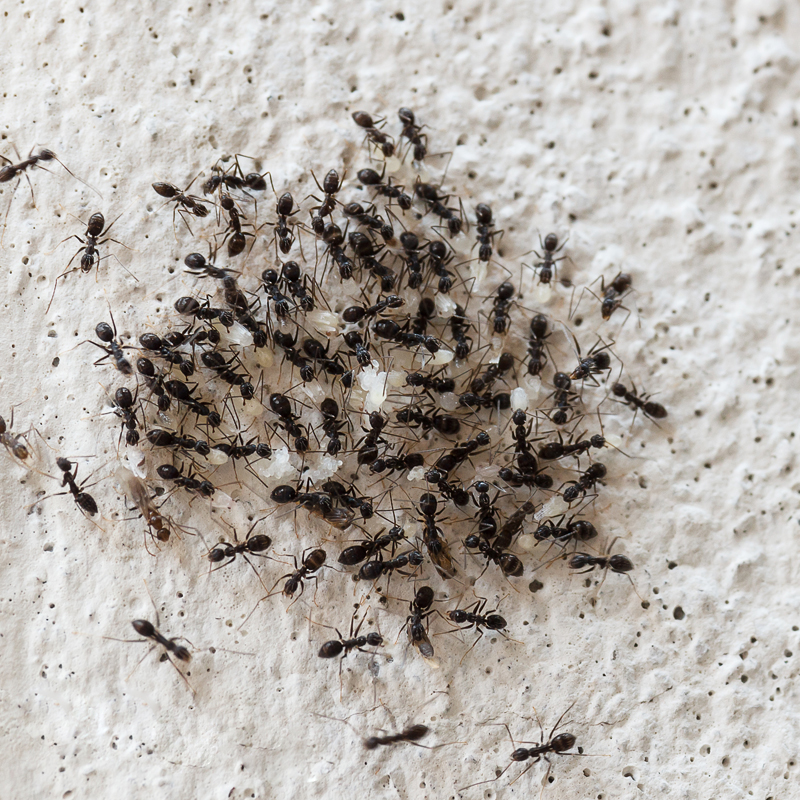
Quick Overview
- Carpenter ants are the primary structural threat to New England homes because they tunnel through framing wood.
- Ant activity peaks from spring through fall, though nests inside heated walls stay active all winter.
- Effective prevention focuses on food/moisture removal, sealing foundation gaps, and cleaning up exterior debris.
- Slow-acting baits outperform contact sprays because workers carry the poison back to the nest, killing the queen.
- Carpenter ant nests hidden in structural timber require targeted professional treatment.
- A year-round plan blocks seasonal surges and secondary household pests.
Common Ant Species Found in Massachusetts and New Hampshire Homes
Knowing which species of ant has nested in your home tells you what it’s after and how to get rid of it. Different ants have different nesting habits, risks and responses to treatment.
Carpenter Ants (Camponotus spp.)
Carpenter ants are the largest common species, with workers measuring between a quarter and a half-inch long. They are typically black, though one local species has a reddish-brown midsection. While carpenter ants don’t eat wood, they dig tunnels to build nests, pushing out fine piles of debris (frass) that resembles sawdust.
Odorous House Ants (Tapinoma sessile)
Odorous house ants are much smaller (about one-eighth of an inch) and give off a distinct rotten coconut odor when crushed. They like to nest inside wall voids and will swarm any sweet food left on the counter or in the pantry.
Pavement Ants (Tetramorium caespitum)
Pavement ants are about 3 mm long and usually nest under driveways, walkways, and concrete slabs. They find their way inside through small cracks in the foundation, looking for greasy or sugary scraps.
Thief Ants (Solenopsis molesta)
Thief ants are extremely small (around 1.5 mm), allowing them to slip easily through narrow spaces, like unsealed pantry boxes. They often set up nests near other ant colonies to steal their food.
Warning Signs of an Ant Problem in Your Home
A defined ant trail moving between a food source and a nest is often the first obvious sign. Ants leave behind an invisible scent trail for others to follow, so even four or five ants walking with a purpose means a nest is nearby.
Small piles of sawdust (frass) under baseboards, window sills, or door frames are a clear sign of carpenter ants. Winged carpenter ants, or swarmers, typically emerge in spring and early summer. If you find them inside your house, it often means you already have a mature colony living in your home’s structure.
Other signs include:
- Soft or hollow-sounding wood when tapped
- Rustling inside walls at night
- Persistent ant activity near leaky pipes, damp crawl spaces or water-damaged areas
In New England homes, damp wall voids that draw carpenter ants also attract mice looking for nesting material, requiring rodent control services. Outdoors, honeydew from sap-feeding insects draws ants, which in turn brings spiders and stinging insects that require wasp control services or spider control services.
How Ant Activity Changes With New England Seasons
Ant behavior in Massachusetts and New Hampshire follows a predictable seasonal cycle:
- Spring: As the ground warms up, colonies wake up in search of food. While carpenter ants start foraging, winged ants fly out to build new nests. Kitchen counters and window sills are prime spots for early spring activity.
- Summer: Hot, dry weather drives ants indoors in search of water. Summer is also when yard pests thrive; managing your lawn with tick control services and routine mosquito control services keeps the rest of your outdoor area comfortable.
- Fall: As night temperatures drop, ants look for warmth and steady food sources. Odorous house ants frequently move inside during September and October and will stay active all winter if your home is heated.
- Winter: Carpenter ants living inside heated walls don’t go dormant. They keep tunneling and feeding through January and February, even while it’s freezing outside.
How to Keep Ants Out of Your Home
-
Remove Food and Moisture Sources
Store all food, including pet food, in airtight containers. Wipe down counters, sweep up floor crumbs, and don’t leave dirty dishes in the sink overnight. Fix leaking pipes, dripping faucets, and damp cabinet bottoms under sinks, as carpenter ants need moisture to thrive.
-
Seal Off Entry Points
Walk around your home’s exterior and inspect the foundation, siding gaps, and window trim. Fill cracks with silicone caulk, put door sweeps on exterior doors, and replace torn window screens. Pay extra attention to where pipelines and utility cables enter your home, as ants will use any small gaps to find their way into your home.
-
Clean Up Your Yard
Keep firewood piles, leaf piles, and heavy mulch beds off your foundation wall. Trim tree branches and shrubs so they don’t touch your roof or siding, cutting off the natural bridges ants may use to climb and enter your home. Monitor crawl spaces, keeping them dry and well-ventilated.
Getting Rid of an Active Ant Infestation
While aerosol sprays will kill the few ants you can see, they don’t reach the nest. Slow-acting ant bait is the most effective option. Foraging ants carry the poison back to the colony, killing the queen and collapsing the nest from the inside.
Here is how to use ant bait correctly:
- Identify target food preferences (sweets, fats, proteins) to pick the right bait formulation.
- Place bait stations along active trails away from kids and pets.
- Avoid using bug sprays near bait, as chemicals repel workers.
- Leave stations undisturbed for one to two weeks, replacing them if activity continues.
- Watch for a drop in trail traffic within 10 to 14 days.
Bait works well for pavement ants and house ants, but carpenter ants in your framing are trickier to get rid of, especially since spraying them can cause the colony to split into multiple sub-nests inside your walls.
When to Call a Professional Ant Control Service
Contact a licensed pest control company if you:
- Find piles of sawdust, hear soft rustling in the walls, or see flying ants inside
- Notice ants keep coming back despite cleaning and using store-bought bait
- Suspect carpenter ants are in your support beams, roof line, or crawl space
- Manage a business or commercial building where pests violate health codes or bother customers
- Are dealing with multiple seasonal pests at once, like ants, spiders, or mice
Pest Control Unlimited offers practical residential pest control services and commercial pest control services across Massachusetts and New Hampshire. Our technicians inspect your property, figure out where the ants are coming from, and treat the problem at the source. For ongoing protection, we also offer flexible quarterly pest management programs and one-time pest control services.
Frequently Asked Question
Why do I suddenly have ants in my home?
Scout ants search for food and water, leaving scent trails for workers once a source is found. Sudden spikes occur during spring warming, heavy rains, or dry summer spells.
Can ants cause structural damage to my home?
Yes. Carpenter ants hollow out structural studs, joists, and rafters to build nests, often remaining hidden until framing is compromised.
Are ant treatments safe for children and pets?
Yes, professional treatments use targeted applications and enclosed bait stations that restrict access while targeting foraging pests.
How long does it take to eliminate an ant infestation?
It depends on the species and colony size. Pavement and house ants clear up within one to two weeks with bait. Carpenter ants require a custom professional treatment plan.
Will ants come back after treatment?
They can return if entry points and moisture leaks remain uncorrected. Ongoing quarterly plans provide regular checkups to stop recurring issues.
Protect Your Home With Lasting Pest Control Solutions
Keeping ants out of your home comes down to removing what attracts them and blocking how they get in. Spotting the signs of an ant infestation early gives you the best chance of stopping a colony before it takes over your home or causes significant damage.
Pest Control Unlimited is a locally owned business serving homeowners and businesses throughout Massachusetts, New Hampshire, and surrounding areas. Our certified technicians conduct thorough inspections, identify the species involved, and apply treatments designed to work safely and effectively in your household.
To find out how to keep ants out of your home for good, call us at (888) 649-9919 or contact us online to schedule your free inspection today.